

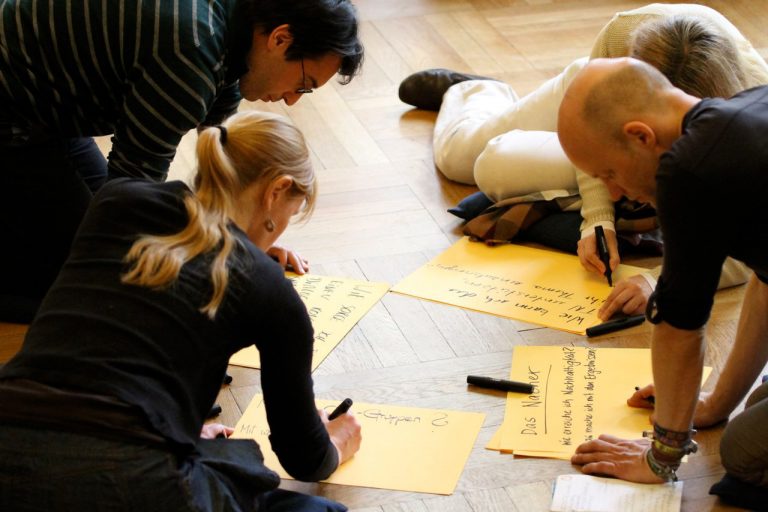
People spend a lot of time in meetings in organizations every day. To get value for the time and effort spent, meetings need to be effective, result oriented, tap into the collective wisdom of the organization and work with the potential of the people.
Meetings can also be a catalyst for organizational change and growth. Effective planning and facilitation create the opportunity for members of your organization to work synergistically, as whole people fully present to the situation and aligned to collective intelligence. Meeting this way, your team members find innovative solutions to solve complex problems and achieve your business goals.
We also work in a structured process that supports sustainable benefits from the meeting. By paying attention not just to the meeting, but what happens before and after too, the benefits of meeting this way continue to last long after the meeting is over.
Effective Meeting Facilitation
Are you interested in:
- using collective wisdom to find needed solutions
- finding urgent solutions to a complex problem that should have been solved yesterday
- inviting shared leadership and creativity throughout the organization
- working with improving the organizational culture and achieving business goals at the same time
- bringing people together to collaborate for a better future
Many factors impact meeting results. It could be small details that are simple to adjust, like the room where it is held (including furniture), lighting, colors, or sounds. Meeting results are also affected by bigger factors like using a special facilitation method or no facilitation method, the leadership current paradigm, an opportunity for collaboration and participation or not.
Whatever you want from your meeting, facilitation and a well-done meeting design is a good way to achieve results and get value for the resources put into it.
Planning a Meeting?
Facilitation is about helping a group have an effective and inclusive meeting. Whether you are looking for a meeting facilitator for a single meeting of great importance or for someone who can help you have more effective regular meetings at work, we can help. Genuine Contact Professionals offer facilitation of:
- highly participative and creative meetings
- result oriented meetings focusing on desired results
- learning, interactive meetings engaging the whole person
- large and small meetings, from a few people up to about 1000 people
- online meetings and in-person meetings with the same highly effective methods
- a structured process with planning, evaluation and accountability meetings surrounding the main meeting
Meeting facilitation is one of our core businesses. We have years of experience from facilitating meetings with Open Space Technology, Whole Person Process Facilitation, World Café, Appreciative Inquiry and many other techniques that blend well together. We know how to design a meeting that is best suited to achieve the results you want.
The Special Role of Online Meetings
As global partnerships, e-commuting, and multi-city or multi-national organizations grow, facilitating online meetings effectively is becoming just as important as in-person meeting facilitation is.
Genuine Contact Professionals have been developing highly effective online meeting facilitation processes based on our in-person techniques for over 15 years. Learn more about our online meeting facilitation processes and how they differ from meeting face to face.
What's Next?
Several Genuine Contact workshops can support you in learning new skills and simple tools and frameworks for effective meeting facilitation that you can begin working with in your organization right away. These workshops include:
- Working with Open Space Technology
- Whole Person Process Facilitation
- Cross Cultural Conflict Resolution
Learn more about these workshops and find an upcoming offering near you.
Or find a Genuine Contact Professional near you. You can work with an independent GC Professional near you to develop a unique meeting facilitation plan to best achieve your desired meeting outcomes.